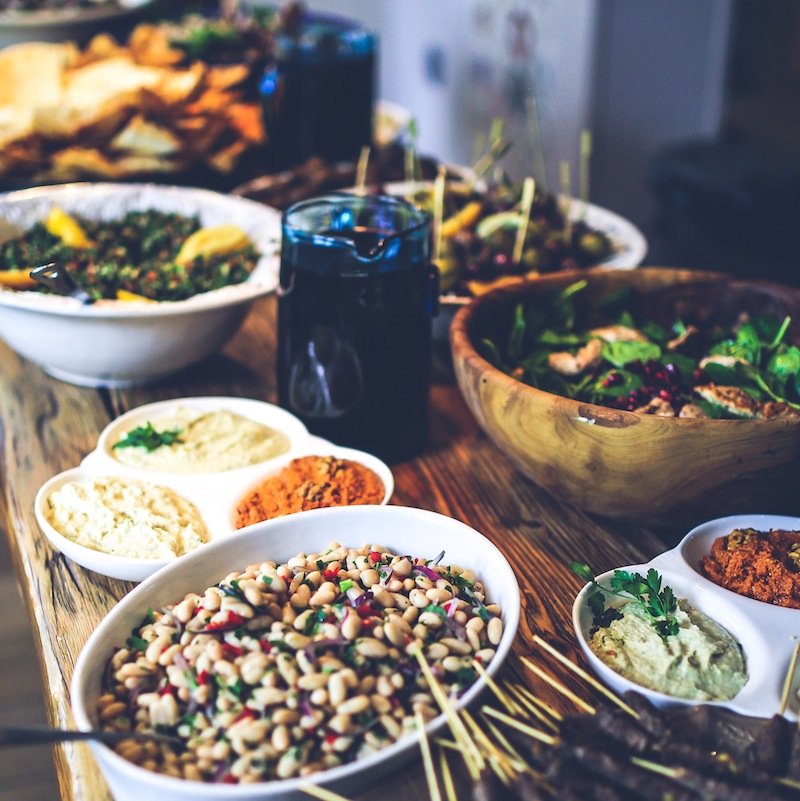
Recipe: Tuna & White Bean Salad
This salad is my favorite “I have no leftovers for my work lunch, what am I going to do?” meal, because I always have tuna and beans in the pantry, and capers and olives in the fridge.
One of the things I love about spending time on a beach in Hawaii is the bodies on display. All kinds of bodies. It's a really good reality check about your own body...namely, the fact that, yes, you have one and it's carried you this far in life. I kind of got that Hawaii feeling when I watched Embrace. We all have bodies, and those bodies are not one-size-fits-all.
Humans come in all shapes and sizes, and I dream of a day when we collectively become more accepting body diversity. If we don't expect everyone to have brown eyes or a wear a size-7 shoe, why would we expect everyone to have the same body size?
"Progress, not perfection." Three important words that I invoke pretty much daily with my patients (sometimes I use the variation "perfection is the enemy of progress"). That's one reason why I was delighted by the Washington Post article, "A weight-loss expert changes his tune: focus on enjoyment, not perfection."
I heard about the BBC documentary, "Clean Eating—The Dirty Truth" the other day and finally sat down to watch it yesterday. Really good stuff, and part of it dovetails nicely with my article in yesterday's Seattle Times, "Avoiding gluten? Odds are you shouldn't."
OK, I've decided it's high time to do a pantry challenge. Mostly because MY pantry has become extremely challenging, full to the point where we sometimes don't know what we have because we can't see it. This has lead to buying duplicate items, which is not only annoying but makes the problem worse!
I confess that I subscribed to Julie Duffy Dillon's "Love, Food" podcast months before I started listening to it. But once I started listening, I couldn't stop, and I recommend it to anyone who feels like their relationship with food could use a little (or a lot of) healing. Here's a Q&A with Julie herself.
It's International Mindful Eating Day! I've been increasingly mindful about being mindful, because this year I'm really working on further cultivating mindfulness skills. If you feel like you could benefit from a little more mindfulness in distracted times, I have a few resources for you.
When was the last time you actually sat down and really savored a meal? We’re talking about really tasting the food on the plate in front of you, while being aware of exactly what you’re eating and what it’s doing for your body.
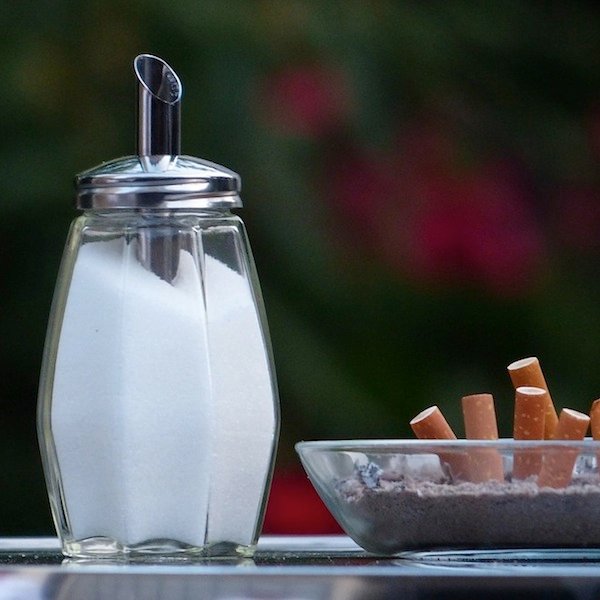
I write about sugar from time to time, most recently in The Seattle Times, previously on this blog, and here and there elsewhere. It's clear that eating or drinking excessive amounts of sugar is detrimental to health. But is sugar poison? No.
I had a wild hair of an idea a few weeks ago when I was out for a walk. I've have some small tweaks to my life that I've been intending to make for a while now (ahem), mostly in the area of stress reduction, but it just hasn't happened. An accountability group, I thought, is just what I need!
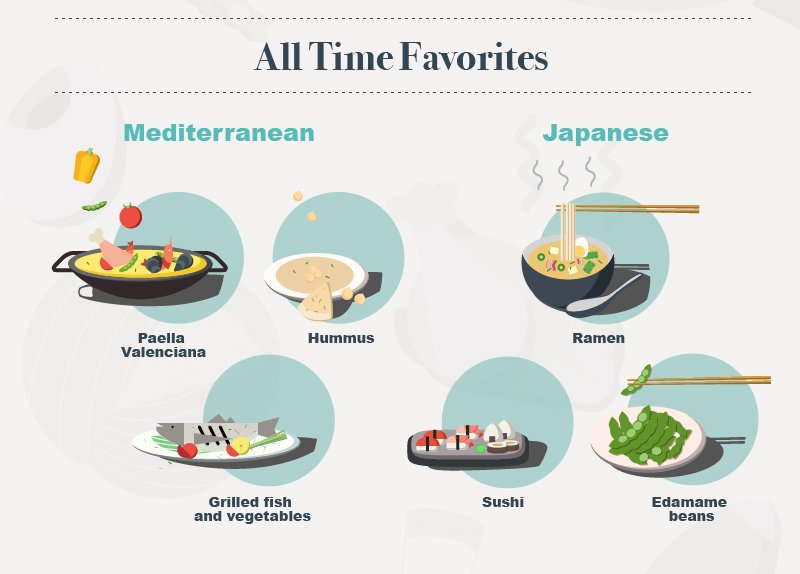
I like this infographic not just because it mentions olive oil (!) but because it makes the point that healthy diets may include different ingredients (i.e., foods), but what they have in common is the vital nutrients we need to keep us healthy. As I say often, there are different ways to eat nutritiously, but all nutritious, health-promoting diets have some common denominators.
Mindfulness is experiencing some backlash lately, but I think the dismissal of mindfulness is based on the unfortunate co-opting of the term, which in many people may contribute to the pursuit of being “perfect” about being mindful. As in other endeavors, don't let perfection be the enemy of the good.
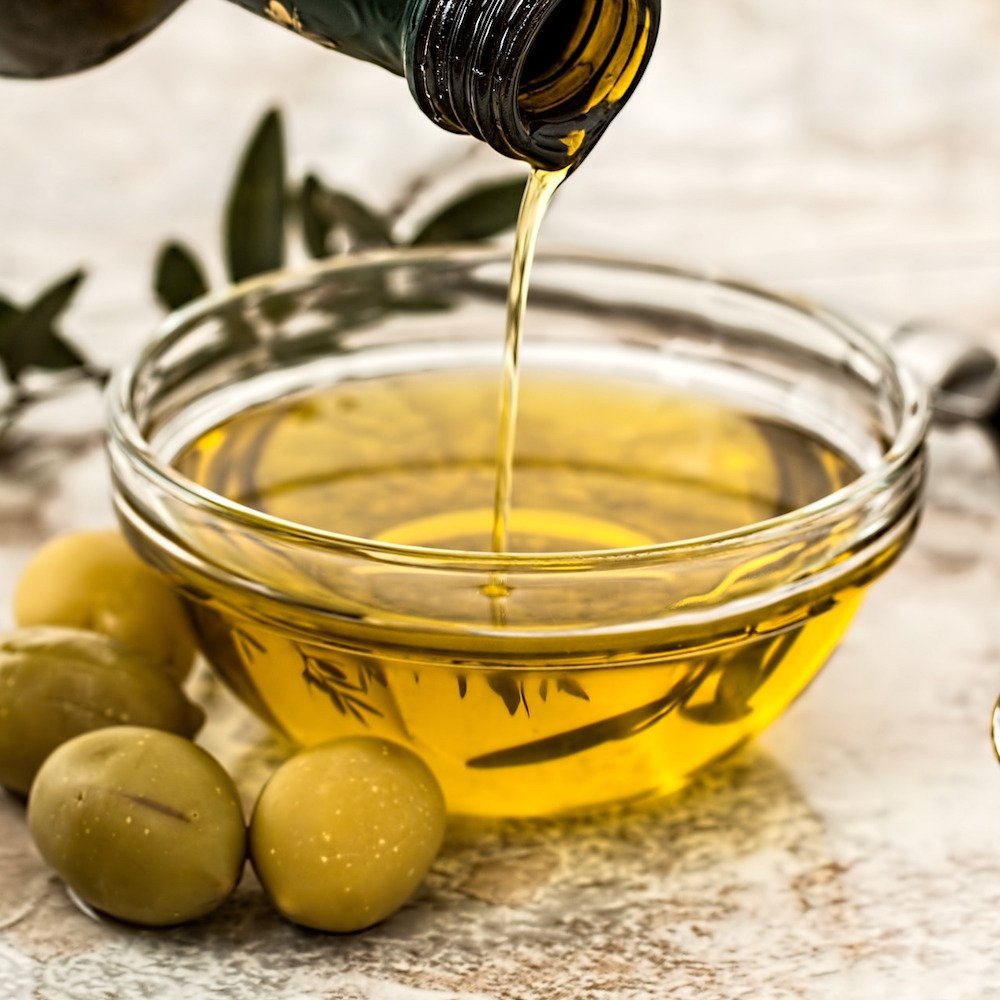
Outtakes (otherwise known as great information I couldn't fit in my Seattle Times column) on olive oil. These olive oil facts will hopefully replace some common myths, helping to make you a savvy shopper and home cook.
I've recently expressed my opinion about the futility of creating a static meal plan (eat this on Monday, this on Tuesday, and so on...with no deviations!) for anyone other than myself. But dynamic plans, where you have a chance to easily make substitutions, is another thing entirely.
If you have any food fears about what is arguably the most food-focused holiday of the year, I'll tell you four things I've been telling many of my patients the past few weeks. Plus, some bonus links to help you enjoy the holiday on your terms.
Does your social life revolve around happy hours, restaurant dinners, lunch dates, coffee-and-pastry meetups and Sunday brunches? This can interfere with your healthy eating goals—but it doesn’t have to.
If you are making a commitment to eat healthier, that commitment shouldn’t get tossed out the window the minute you experience a change in your daily routine. It’s pretty easy to get in the habit of eating healthy at home and bringing healthy brown bag meals and snacks to work. What’s a bit trickier is extending those good habits to what you eat when traveling upends your normal routine.
Happy Friday! No links post this week, as I'm traveling to visit family on the East Coast and had writing deadlines up until the nanosecond I left for the airport. But please enjoy this week's column in The Seattle Times, appropriately titled "What you need to know about iron." Stay strong!
If you work outside the home, a huge chunk of your day is spent in the workplace, which makes that your second most important food environment (after your home). It’s also an environment that can be unpredictable in what temptations it sends your way. If your job is stressful, and stress makes you want to eat, that’s one more factor you need to consider.
Why is it important to be master or mistress of your food environment? To begin with, most of us lead busy lives, with multiple demands on our time. If we get hungry, and healthy food isn’t easily accessible, but non-healthy food is, guess what we’re probably going to eat? That's right, the non-healthy, easy-to-grab food.
It’s a refrain I hear a little too often: “I just need someone to tell me what to eat.” In today’s age of rampant nutrition confusion, I sort of get it—but on another level I don’t get it, not at all. I'm not your boss, I'm not your mother, and I'm definitely not the food police. As adults, we need to be able to make decisions about the things that are important to our health and happiness.
Last week, 20-or-so local dietitians gathered at Blue Ribbon Cooking School to learn how to cook Nordic cuisine with Siggi Hilmarsson, the man behind Siggi's yogurt. The food was delicious and nutritious...just the way food should be!
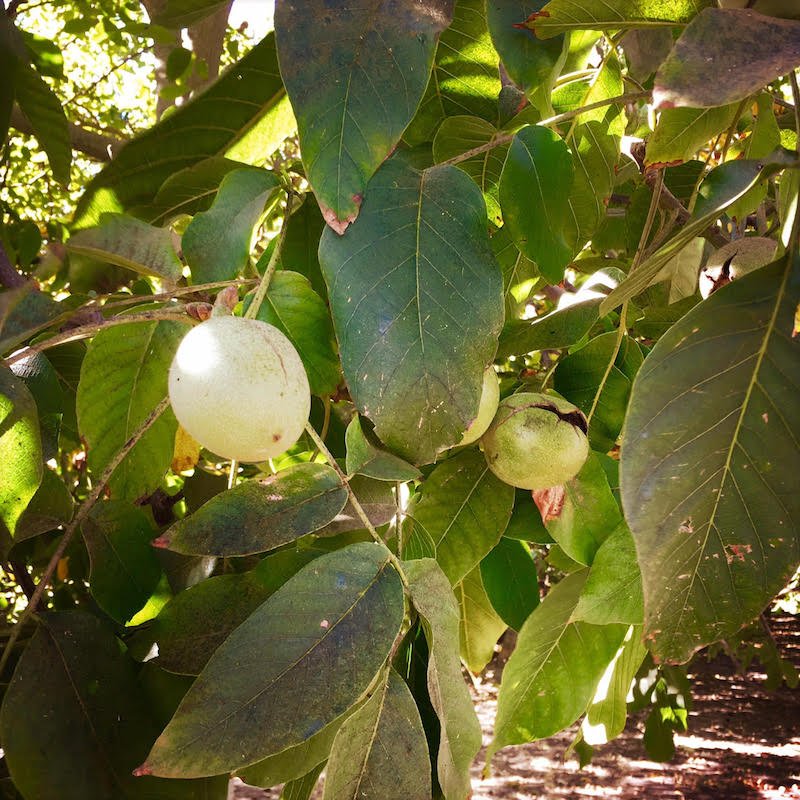
Whenever possible, I like to know where my food comes from, on both a geographical and personal level. Personal, as in whose hard work do I have to thank for the tasty, nutritious foods on my plate. Last week, I was fortunate to be able to take that behind-the-scenes look at the California Walnut harvest.
I love walnuts and eat them pretty much every day, partly because they are delicious and versatile, but also because they are rich in the plant-based omega-3 fatty acid alpha linolenic acid, or ALA. As with other omega-3s, ALA is extremely healthy, but it’s also a more fragile oil. In other words, it can go rancid easily if not stored properly. Here's what you need to know.
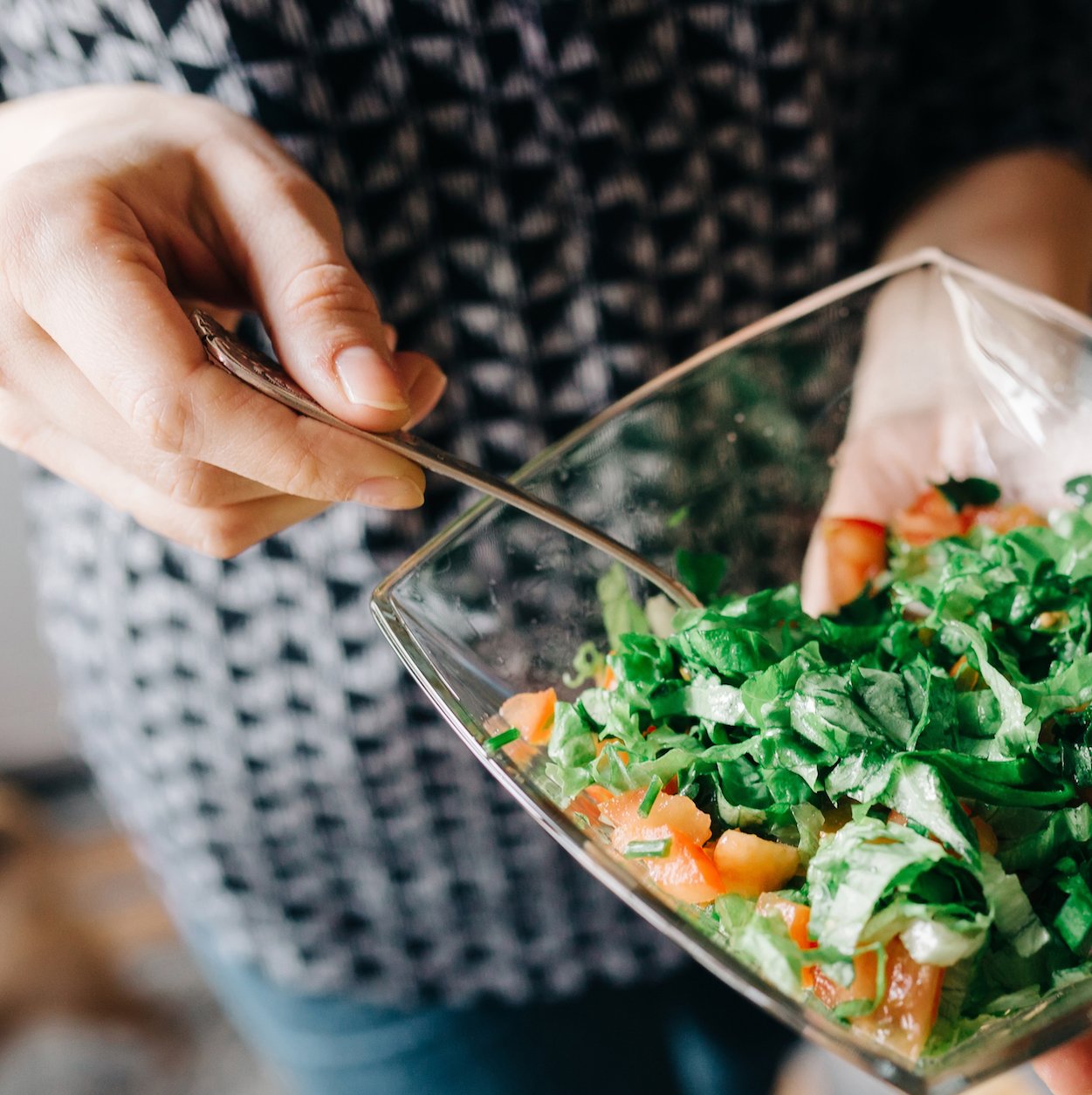
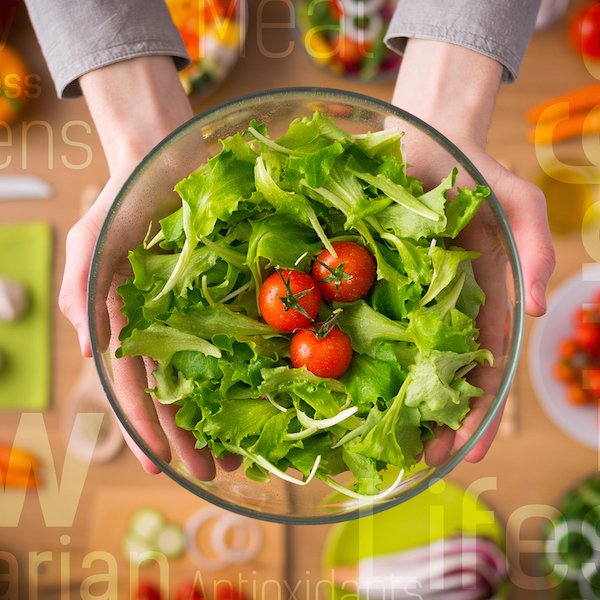
I try to brown bag my lunch everyday, and my favorite brown-bag lunch, hands down, is some sort of a salad. This salad is tasty and healthful and reasonably hearty, although you could absolutely add some leftover chicken or salmon, or part of a can of tuna. I often do. And it goes without saying that this salad will taste better when packed in a mason jar.
Last week, I was sitting with a group of my Menu for Change patients at an event, and one of my long-time patients said that whenever she tells someone about Menu for Change, they ask her, "So, what's the diet like?" She looked at me, and we laughed, and I said, "I would rather die than put someone on a diet." And that's the truth. Because diets don't work.
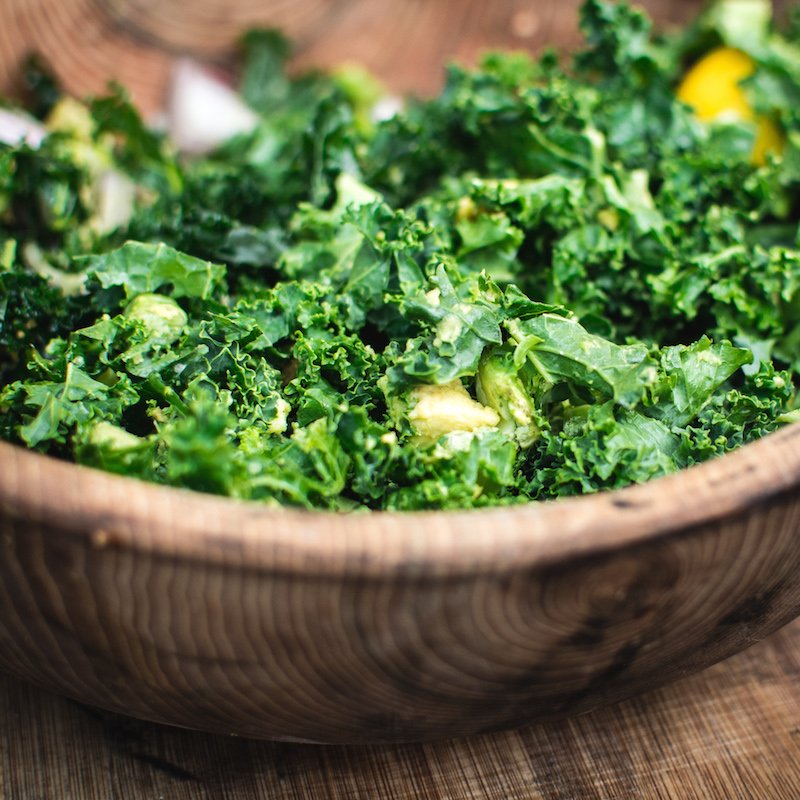
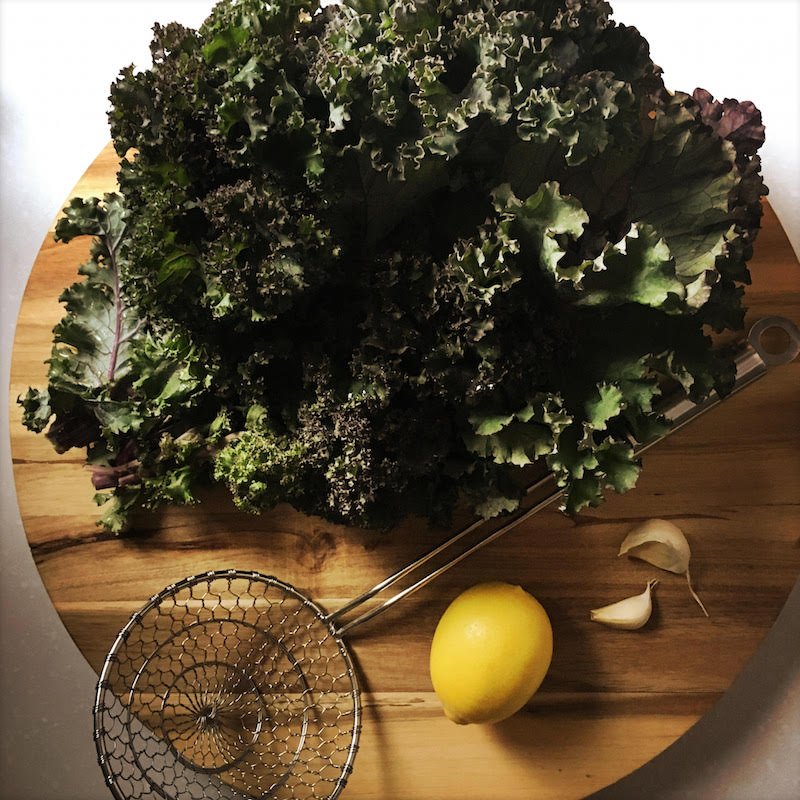
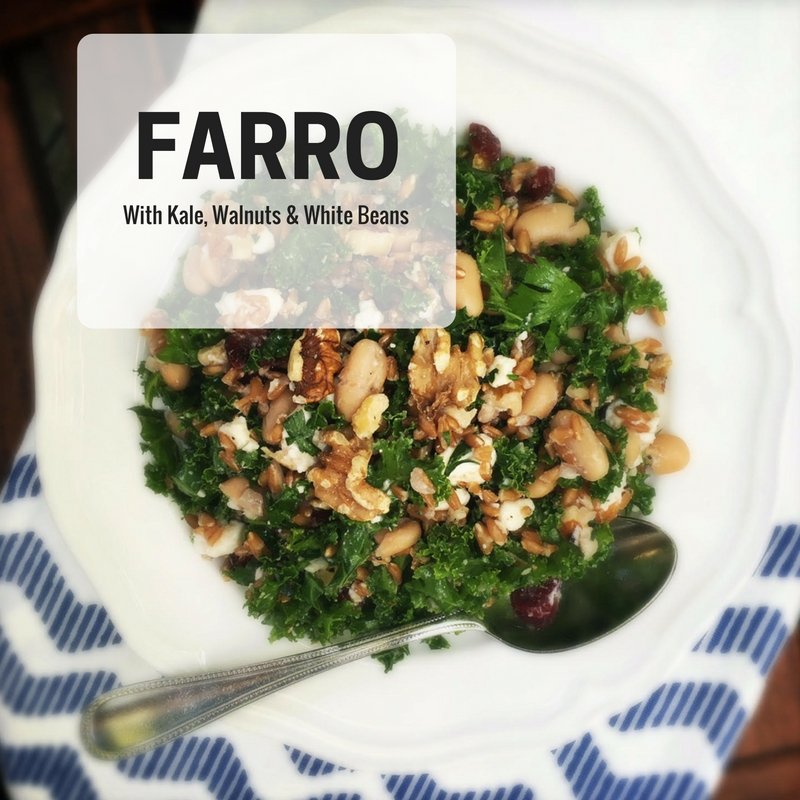
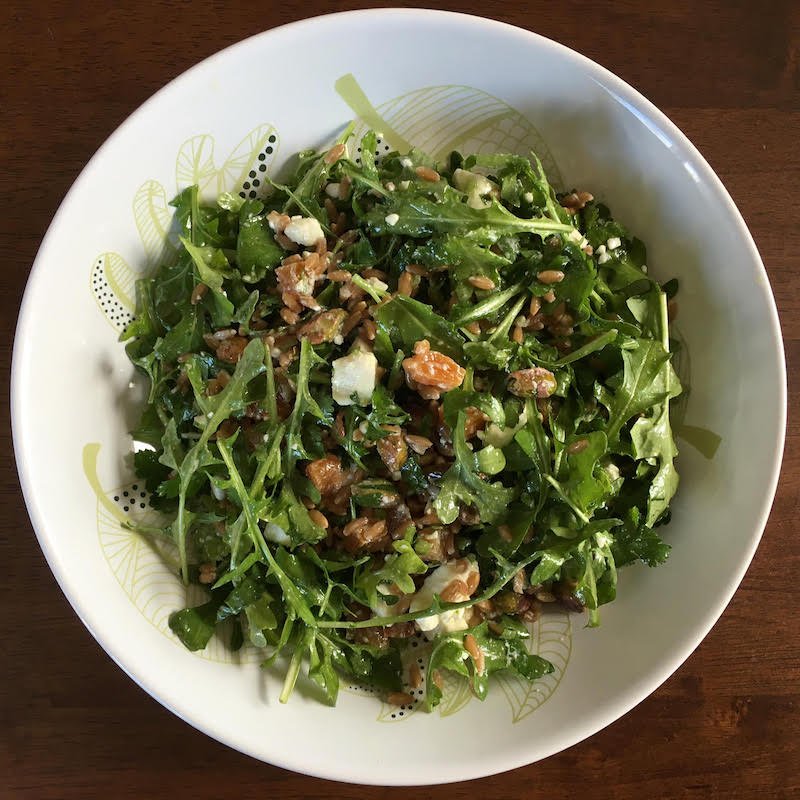
I've never been shy about my love for farro (or kale for that matter). Because farro is a sturdy grain and kale is a sturdy green, this holds up nicely for a few days in the fridge to enjoy as leftovers, perhaps packed in a mason jar (wink) as part of a brown bag lunch.
As free-living adults, we have the right to eat whatever we want, whenever we want, in whatever amount we want. The fact that you probably don't do that means that you have some food rules, or as I actually prefer, food guidelines.
Read enough books or websites that claim to have the secret to how to eat (for weight loss or simply for good health) and you’ll feel like you have whiplash. That’s because the truth is nowhere and everywhere.
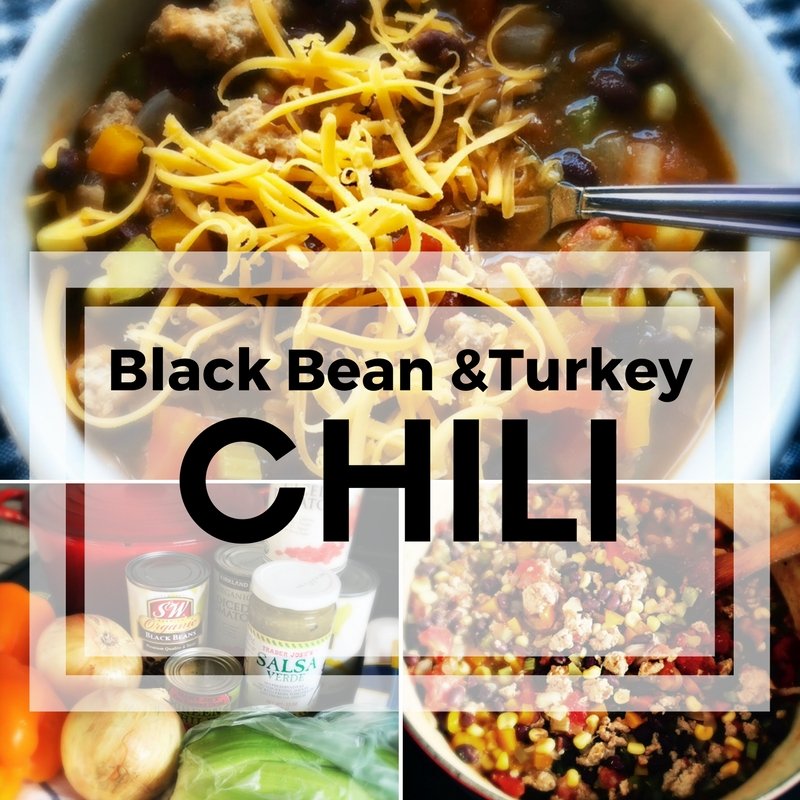
For some reason, I haven't made this black bean & turkey chili for ages. I decided it was just the thing to make Monday after the end of a long day of writing. It's the perfect sort of dish for when you are feeling brain tired and uninspired...it's simple, tasty, hard to mess up, and doesn't require too much chopping!
A handful of years ago, I read a New York Times opinion piece on how our incompetence masks our ability to recognize our incompetence. While on the surface this had nothing whatsoever to do with nutrition, it made me ponder how this might relate to eating and physical activity habits. In other words, are we prone to being victims of self-delusion?
My interest in the chickpea flour, water and olive oil pancake known as socca peaked when we were planning our first-ever trip to the south of France. Socca is popular not just in southern France and Italy. The traditional—and best—way to cook it is in a wood-fired oven (mobile or otherwise), but you can easily make do with your home oven using a skillet or pizza pan.
I know how much better my weeks go when I meal plan, and having tasty leftovers (in the fridge or freezer) is an important part of my planning. This is why I count Ellie Kreiger's newest book 'You Have it Made: Delicious, Healthy, Do-Ahead Meals' as an important resource.
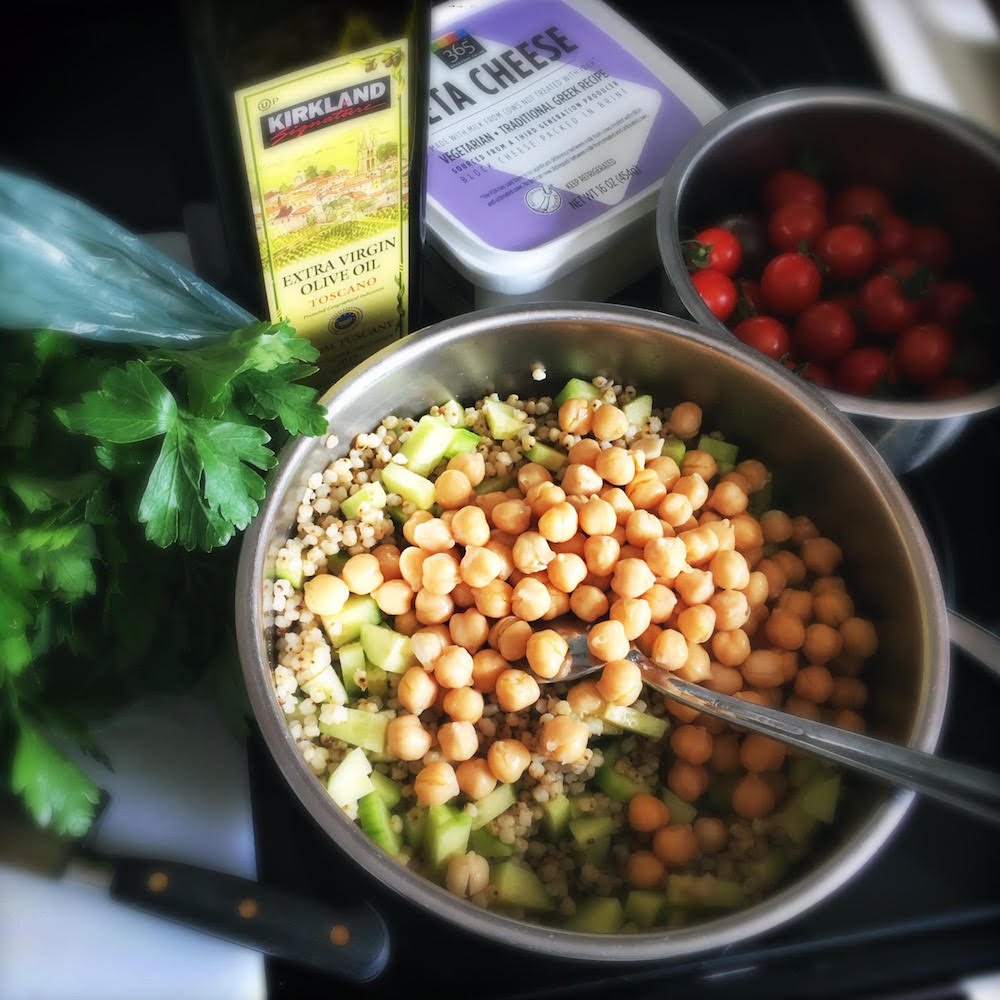
I like dishes that are flavorful but simple, and that's what I had in mind when I devised this recipe for The Seattle Times. I'd been meaning to experiment with sorghum grain for quite a while, having read about it here and there, but when the offer of free samples came my way, I decided the time was now.
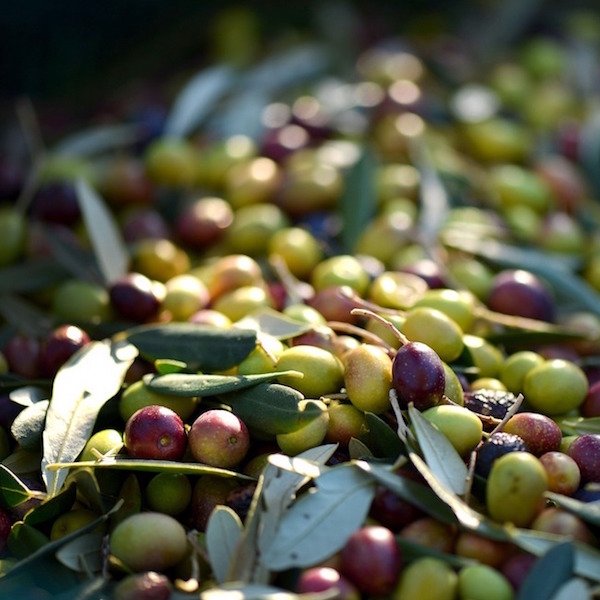
I plan to write a much longer piece about olive oil for The Seattle Times in a few months, but I was so excited by what I learned about this healthful oil when I was at the International Food Blogger Conference (IFBC) a few weeks back that I wanted to offer a "highlight reel," so to spea
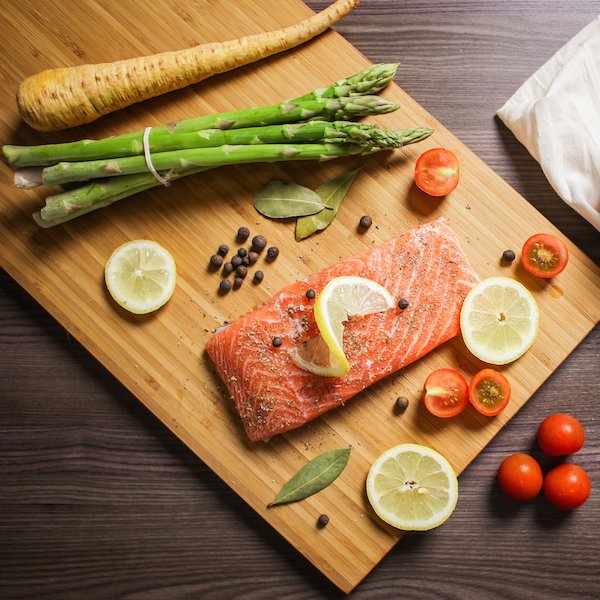
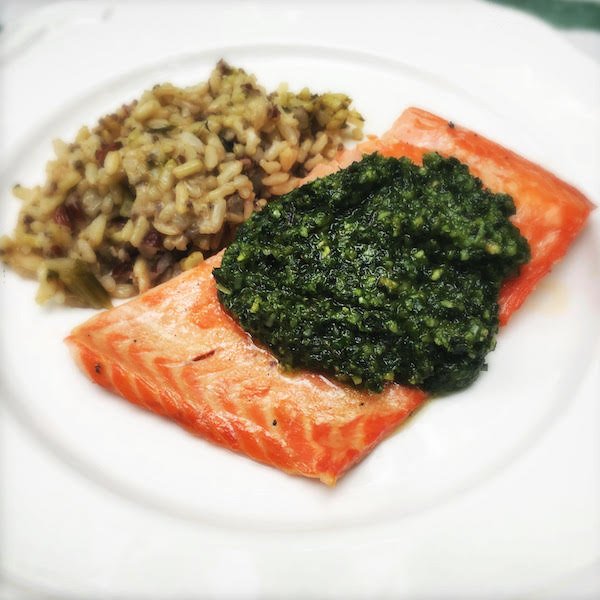
Today is the first-ever Alaska Wild Salmon Day. We are lucky here in Washington state to live so close to Alaska, home of well-managed wild salmon runs. If you don't have plans for dinner tonight, I suggest you swing by the store and pick some some gorgeous, omega-3-rich wild salmon for yourself!
I’ve discussed the “one bite at a time concept” from my website tagline so now let’s turn our attention to the phrase “optimal health.” What is that, exactly?
When a chef counts Julia Child and M.F.K. Fisher as his personal mentors, you can bet he has some interesting stories. And these stories are more than just stories...they have relevance for how we cook and eat today.
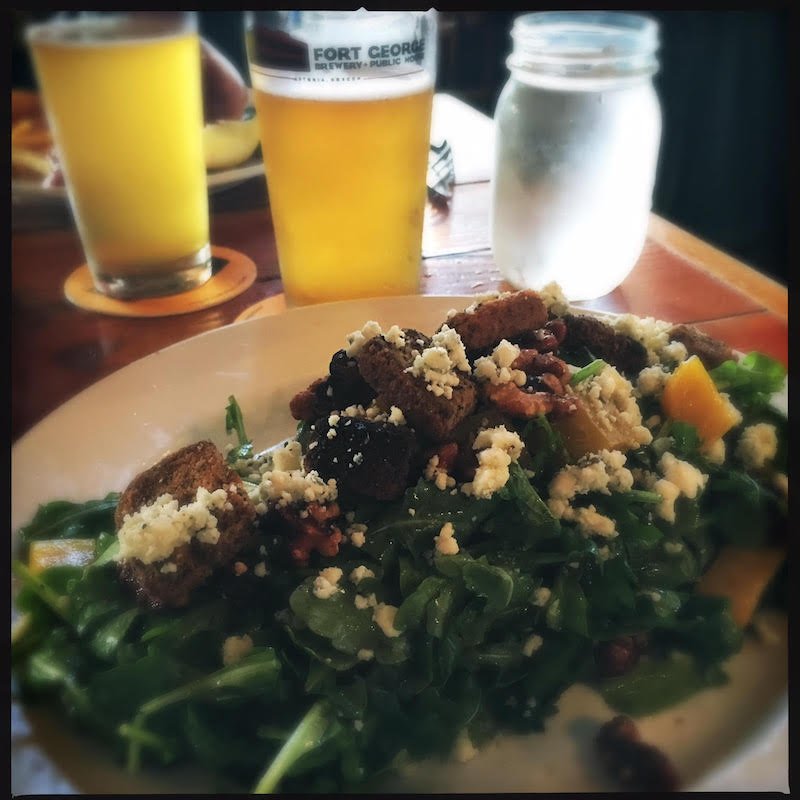
I love to visit Oregon, and last Fourth of July weekend we found ourselves camping near Astoria, Oregon. Astoria is a smallish city-town (about 10,000 people), but it has a lot of character and, as I was happy to discover, some really tasty food and craft beer!
Odds are, you’ve noticed the tagline in this site’s header: "Helping you achieve optimal health and mind-body wellness…one bite at a time." So what’s that about, exactly? It’s about this: Healthy eating is not an all-or-nothing deal. It exists on a spectrum.
A cautionary tale about what happens when you don't read food labels (or accidentally put the wrong product in your cart). Specifically, label tip-offs that a loaf of bread is lacking in nutritional goodness.
My picks for the week's most interesting nutrition news, plus a little mourning for recent world events (along with photo remembrances of Nice from happier times just three months ago).
In case you have questions (or were questioning my methods) after reading my latest On Nutrition column in The Seattle Times ("Why butter isn't back: not all saturated fat is created equal"), this post's for you. P.S. I also talk about my abiding love for butter. Are you shocked?
What you eat matters to both skin and health, but so does how you cook it. It’s summertime, which means few things are better than tossing dinner on the grill. Unfortunately, the process of grilling meats produces advanced glycation end products (AGEs), compounds which may contribute to premature aging in your skin. So what’s a grillmaster (or those who benefit from their efforts) to do?
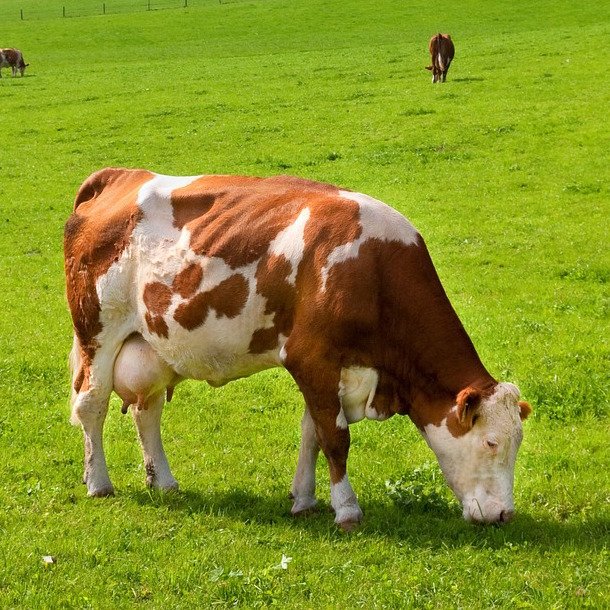
I often talk about what I like to call the Omnivore's Responsibility. That is, if you choose to include animal foods in your diet, you have a responsibility to at least respect the contribution that those animals give to your nutrition. If possible, you should go further and educate yourself about animal care. The FARM Story website makes it easier to know about how dairy cows are cared for.
You probably saw the news earlier this year that organic dairy and meat are healthier for you because they have a more beneficial fatty acid profile. Are the fatty acid profiles of organic milk and meat really thats different from their conventional counterparts...and how much of that difference is due to grass-feeding? Here's what I found out.
I know, I know…I need another cookbook like I need the proverbial hole in the head. Believe me, there are many cookbooks I “try out” from the library that don’t meet my standards and/or don’t add anything unique to my cookbook library. But there are three books I’ve vetted recently that may actually make the cut.
Before I get to this delicious Potato-Purslane Salad recipe, I want to provide a little commentary on last week’s news that eating potatoes increased the risk of developing high blood pressure. Whenever I see a headline-grabbing nutrition story such as this one, I make sure I find and read the original research paper to see what’s what.
People think it's weird that I'll go to California with empty suitcases and fill them up with produce to take home, but I don't see why. I mean, I'm already going there, I love visiting farmers markets when I travel, and it's torture to leave those markets empty handed.
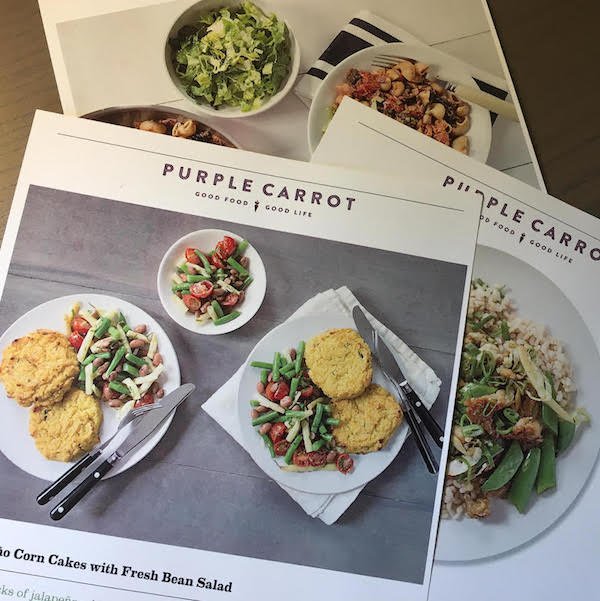
My curiosity about meal kit delivery services recently got the best of me, and I decided to start by trying out Purple Carrot, the vegan meal delivery service that Mark Bittman left The New York Times for last fall. Ironically, on the day my order was delivery, I saw the news that Bittman had left Purple Carrot. When I tasted meal number one later that evening, I was pretty sure I knew why.
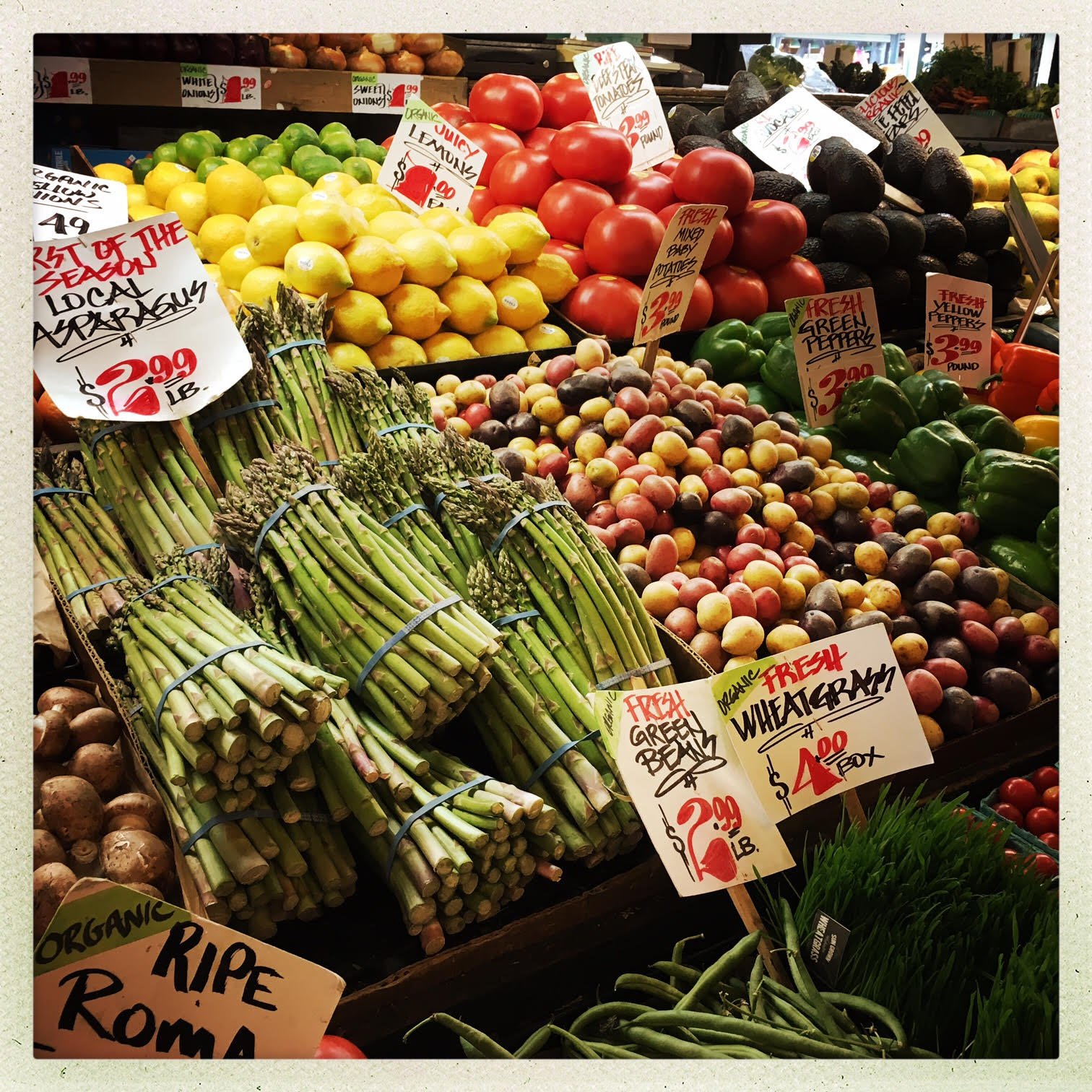
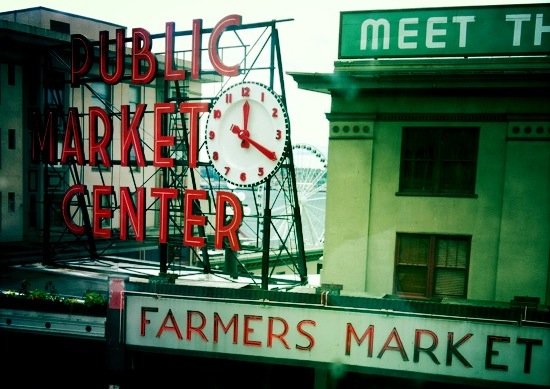
Last Thursday, I had the opportunity to attend the "At the Kitchen Counter with Beef" event with some local food bloggers and other culinary types at Pike Place Market. For no particular reason, I haven't been down to the Market in forever, and it was great to be back...and to sample some tasty beef dishes.
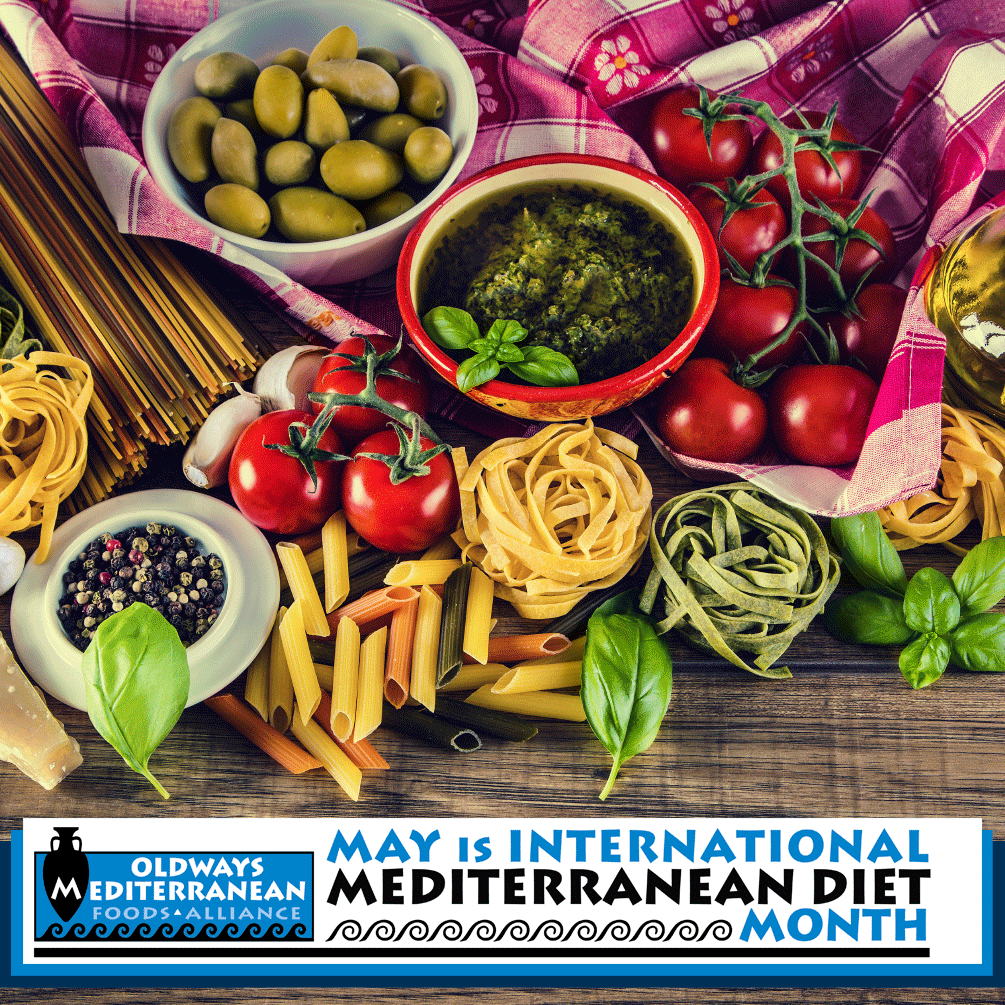
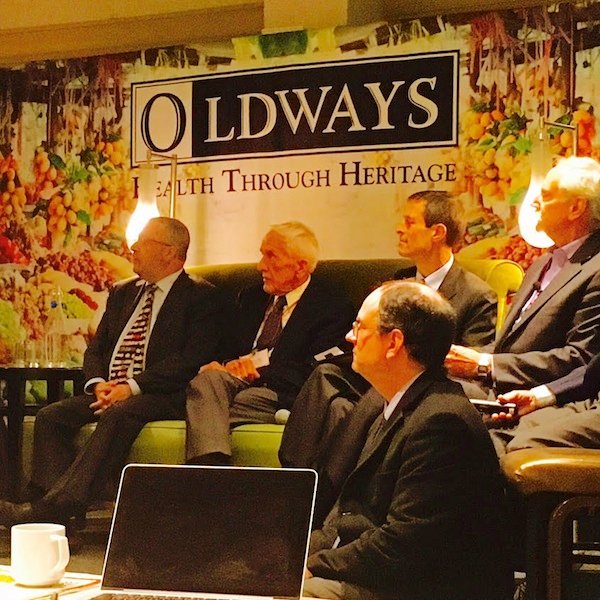
M is for May, and also for Mediterranean, which might not be why May is Mediterranean Diet month, but if nothing else the alliteration is fun. The Mediterranean diet is one of my favorite ways to eat, and Oldways is one of my favorite resources for all things Mediterranean.
I'm a big believer in the power of accountability, whether it be accountability to yourself, or to others. I decided in January that I was going to write and self-publish a book this year. Well, the year is nearly half over and I haven't made more than preliminary progress on the book front, so I'm upping the accountability factor by announcing my intentions to you, right here, right now.
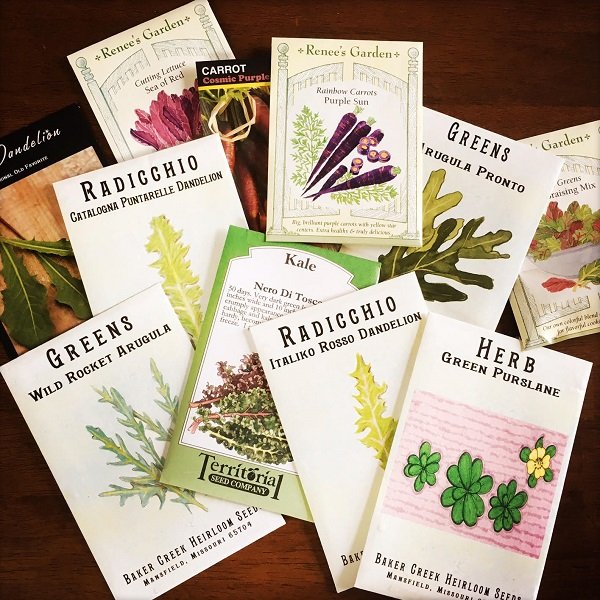
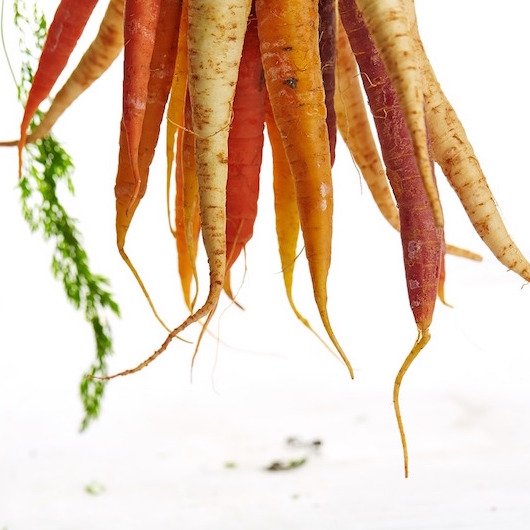
Why I'm growing weeds in my garden this year, the power of pigment in plant foods (i.e., purple carrots and dark leafy greens), and the genesis of my personal "Mediterranean Northwest" project.
Well...so much for posting while I was in France. That went real well. I have two excuses, though...other than enjoying my time in the Cote d'Azur and Paris. Here's a few pictorial highlights, including a few of French cats, because the internet doesn't have enough cat photos.
No links post this week, because I've been busy getting my act together to fly off to France. I'll be posting vacation dispatches as the mood strikes me. Au revoir!
Last weekend I was in Los Angeles for a culinary conference which meant (oh, the irony), that I had no time to do food prep for the coming week. This meant buying my work lunches (salads, but still) and coming up with dinners on the fly. This weekend, in the interest of making my food week go smoother, I got busy in the kitchen after breakfast.
It’s always interesting watching reactions to my Seattle Times columns on social media and via email. My most recent column on whether alcohol is healthful got a lot of mentions on social media, but it also got pushback from some clear wine aficionados, as well as a number of comments that suggest that the commenter didn’t read my entire column.
Ask me what my favorite whole grain is, and my unhesitating answer will be, "Farro!" Not that quinoa, barley, oats or rices of various incarnations (brown, black, red, green, wild) don't play a role in my kitchen, but farro is my true love, lending its appealing nutty chewiness to soups, pilafs, salads.
In my most recent On Nutrition column for The Seattle Times, "Counting calories? Don't put too much faith in numbers," I wrote about how it's useful to have an idea of about how many calories are in certain foods, but it's not useful to get bogged down in tracking calories in and calories out. While there is a sense of security in numbers, it's increasingly difficult to be certain of what a calorie actually means.
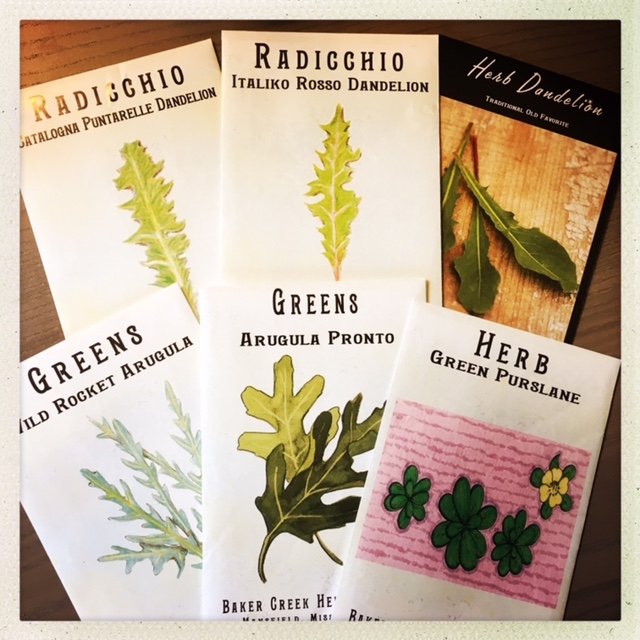
I though I had this year's vegetable garden planned months ago. While I planned for my normal roster of greens (assorted lettuces, kale, swiss chard, mustard greens), I have become positively entranced by the notion of upping my greens game. As with many things in my life, a few books are to blame.
Default behaviors reduce the number of food choices you have to make in a day (since the average person makes more than 200 food choices a day, reducing this number is a good idea, especially since our willpower wanes as the day goes on), while delays are a way of creating space between an impulse to eat (or do) something and the final action.
I have a little bit of a problem with the idea of "everything in moderation." One issue is that some people are not good at moderating intake of tempting, highly palatable foods. Another is that many food companies use "everything in moderation" as a defense when their products are under attack.
Today is Registered Dietitian Nutritionist Day. You're forgiven if you didn't know that, as you won't find it on your calendar along with Memorial Day and Christmas. But it's a very important day, for a few reasons that I'll tell you all about. One being that I love being an RDN!
Nutrition confusion is something I write about from time to time, because if you are a consumer of nutrition information, you know that all too often you’ll read “Eat this” only two weeks later to read “No, whatever you do don’t eat this.” I’m not sure what’s worse, that sort of nutritional whiplash or this scenario: when you read something that is patently false but you don’t even know it’s false.
More of my interviews with David Ludwig, MD, PhD, author of Always Hungry (a book grounded in the science that will hopefully put to rest the mistakes and misinformation of the low-fat era) and his wife, Chef Dawn Ludwig, who developed the easy, healthy, delicious recipes in the book.
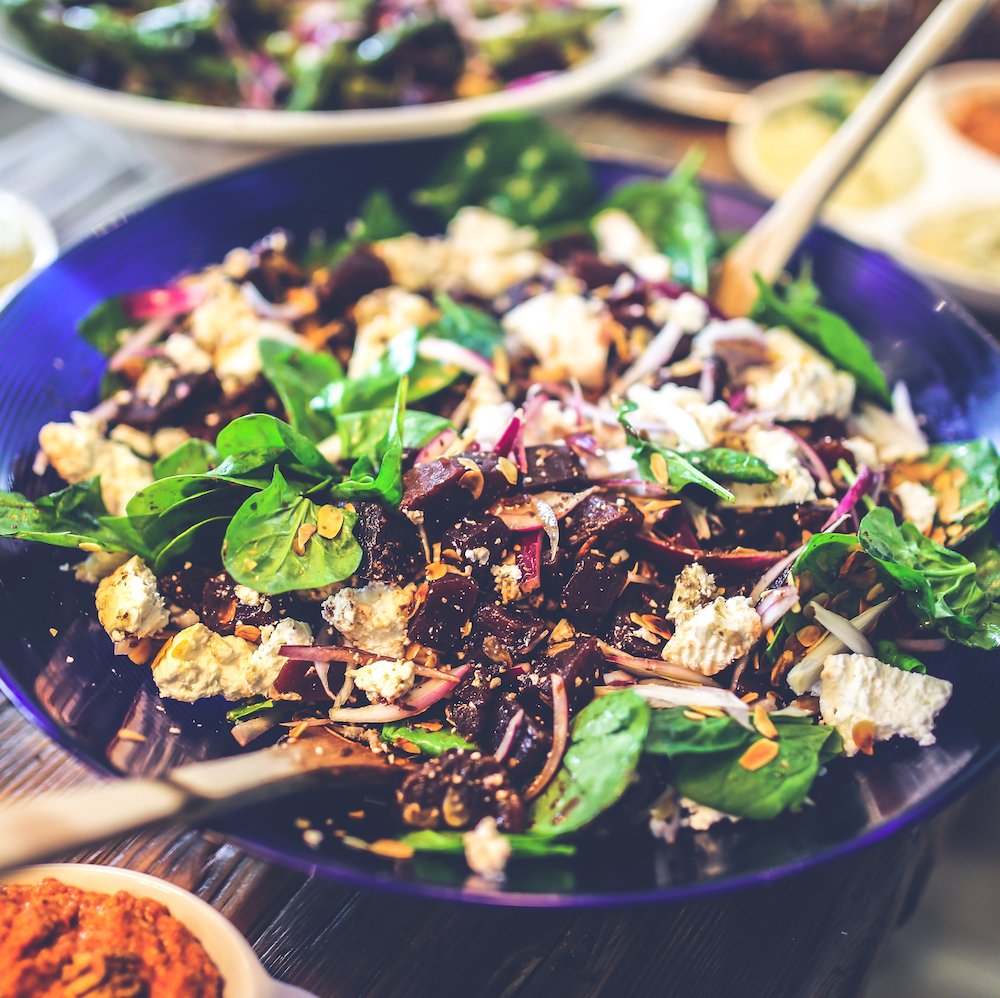
A tasty, nutritious, hearty salad in honor of World Pistachio Day. Make this salad as-is, or use it as a template to make it your own!
I was asked recently why I don't "preach" to people that they should eat organic food. My response is that I don't "preach," because nutrition is a science, not a religion. That said, there are some good reasons to buy organic, as well as good reasons why organic s not always better.
I lead an every-other-month book club at Menu for Change, and our most recent book pick was Russ Harris' The Happiness Trap: How to Stop Struggling and Start Living. I originally bought the book based on recommendations from colleagues who work with patients who struggle with emotional eating, anxiety, eating disorders, and so on. Their recommendations were spot-on.
Do you make excuses as to why you can't exercise? So do I, occasionally, but after what I witnessed today, I will never make another exercise excuse...ever!
Have you been working on cultivating mindful eating skills (or thinking about it)? You may be encouraged to know that tomorrow is the inaugural Mindful Eating Day, sponsored by The Center for Mindful Eating (TCME). Registration, which is free, will earn you an invitation to join a special Facebook group created just for this event.
If you haven't yet read my recent On Nutrition column, "The new dietary guidelines: The good, the bad and the ugly," please check it out. I don't know how many individuals take it upon themselves to shape their eating habits based on what the Dietary Guidelines for Americans recommends, but they do shape food policy as well as decisions made by industries and organizations that may be feeding you at one point or another, so they do matter.
Happy New Year, everyone! I realized in the middle of my very busy day yesterday (lots of patients!) that this is the best, most hopeful New Year I've had in a while. To make 2016 even better, I've chosen a few intentions for the New Year.
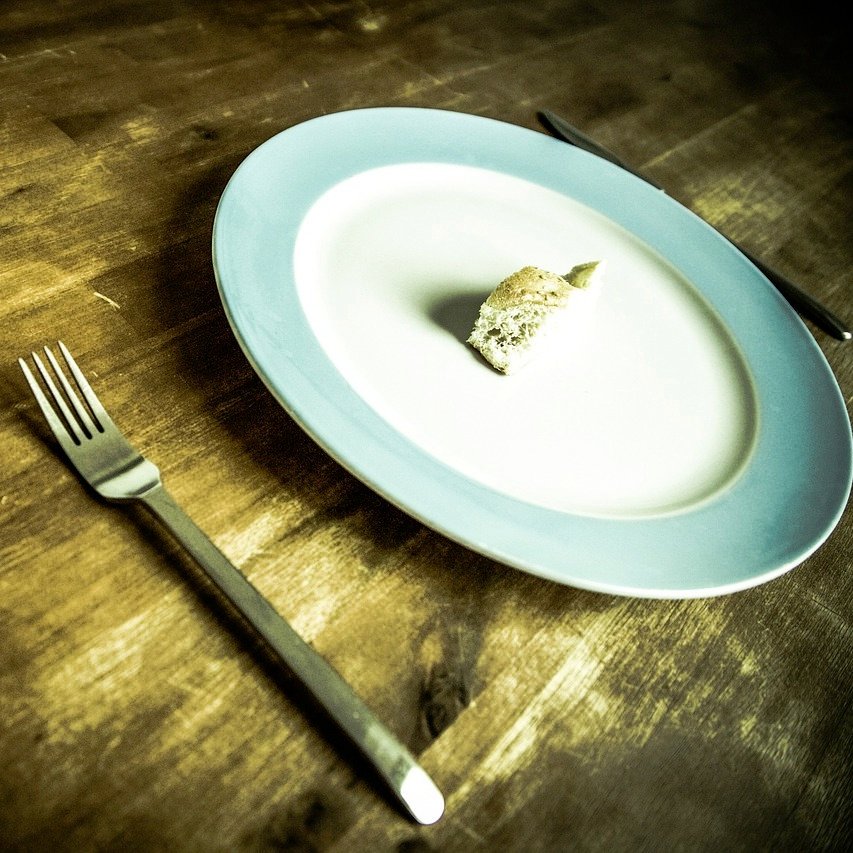
As I discuss in my latest On Nutrition column, food waste is a big problem in this country, but so is our society's lingering tendency to maintain membership in the Clean Plate Club. I have a few patients who told me they were raised to believe that it was an actual sin to not clean their plates.
I'm sure that your week is as busy as mine, but I wanted to take a moment to wish all of you, my readers, Happy Holidays, whether you celebrate Christmas, Hanukkah, the Solstice, Kwanzaa, or Festivus. Work has been surprisingly busy this week (and next). Who knew that so many people would actually want to see their dietitian over the holidays? If I had to wrap up my holiday eating advice in three bite-size nuggets, it would be this.
If you read my recent Seattle Times columns on the microbiome and antibiotic resistance, you might come away feeling like antibiotics are bad news. While it's deeply unfortunate that antibiotics can throw the ecology of your gut microflora into disarray, we are still lucky that we have antibiotics as a tool when we truly need them, because some bacterial infections can kill you.
I have a confession: I’ve been a little lazy lately. Even though I prefer to brown bag my breakfast and lunch most workdays, I’d been relying a little too often on the little sandwich/salad/soup shop downstairs in my building. But sometimes convenience stops being convenient.
A little behind the scenes look at the amazing gathering of nutrition scientists, medical experts, food systems experts and health/nutrition journalists (most them registered dietitians) who gathered in Boston on one chilly weekend to talk about Finding Common Ground among seemingly disparate nutritional philosophies.
In Day 1 of Oldways Finding Common Ground, 20 nutrition science experts presented information about various dietary patterns (vegetarian/vegan, paleo, Mediterranean, and low-glycemic) as well as other nutrition issues like the microbiome, gluten, saturated fat, and marketing and the food environment.
Greetings from Boston! I'm here for Oldway's Finding Common Ground conference, and the timing is a bit ironic in light of some of the emails I've received commenting on my column in yesterday's Seattle Times, "Don't give up your steak just yet: How to have red meat and prevent cancer, too." I'll share a few highlights from my favorite email.
I'm fessing up: My 2015 Cookbook Challenge has kind of fizzled out. I think it was a worthy endeavor, for reasons I've previously discussed, namely that I revisited cookbooks that had been languishing on my shelves and cooked some wonderful dishes, but lately my foodie thoughts have been running to magazines, websites and new-to-me cookbooks from the library.
Next week, I'll be attending a very exciting conference in Boston. Finding Common Ground will bring together many of today's leading experts in nutrition science along with members of the media (I'm attending as media). The goal? To come to a consensus on what a healthy diet looks like--and no, this doesn't mean the "one perfect diet," because there is no such animal.
Every once in a while, I go on a bowl food kick, partly because it’s an easy way to assemble a healthy, tasty meal (and use up leftovers). What I love about bowls is that it's not about a recipe, it's about a template. I find that templates are much more user friendly, especially during those times when you're tired and busy but still want to prepare a healthy meal for yourself.
No sooner had my most recent On Nutrition column, "The rise, and potential fall, of Big Soda," hit the Seattle Times' website when I received an email from the American Beverage Association, asking me to consider updating my article to "include the industry’s perspective." My (mental) response to that? "Not bloody likely."
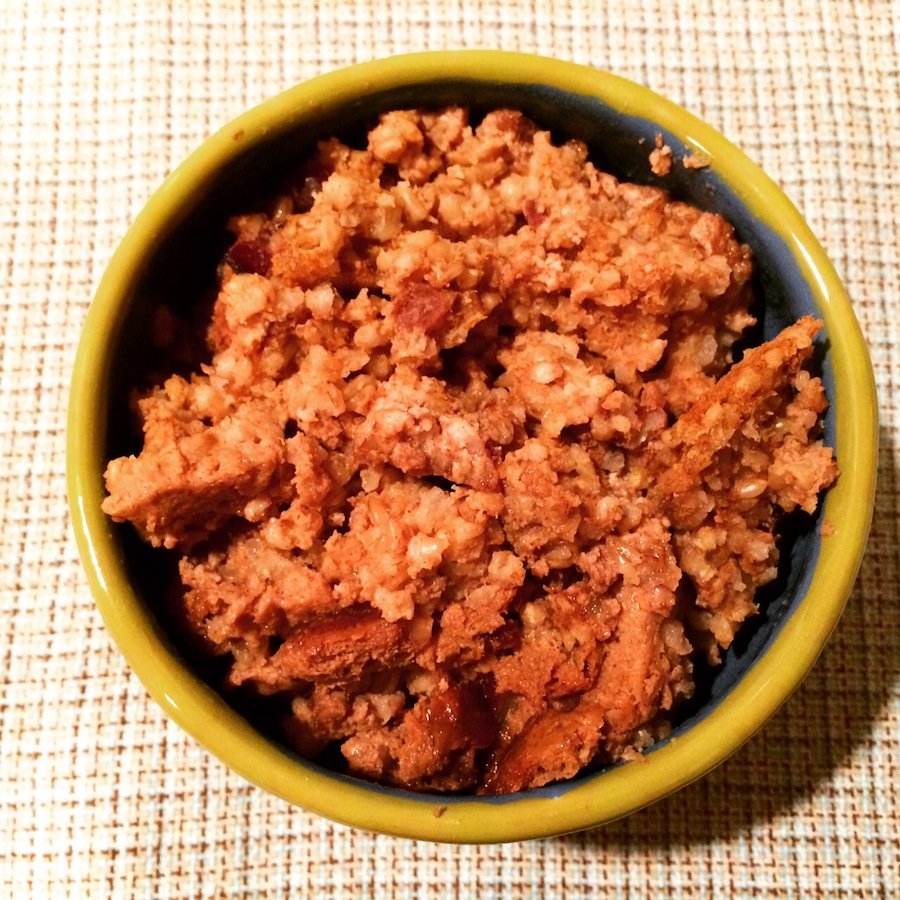
Happy Pumpkin Oatmeal Day! OK, technically it's National Oatmeal Day, but since National Pumpkin Day was on Monday, and I missed it (drat!), I decided to make this recipe for Baked Pumpkin Pie Oatmeal a two-fer. I started with my favorite baked steel-cut oatmeal recipe and tweaked it (why reinvent the wheel, I say). This is morning #2 of it, and I say it's delicioso!
I realize that the normal thing would be to wait until actually finishing a book before writing a review, but I so enjoyed reading as far as page 198 of 447 of Dan Barber's The Third Plate: Field Notes on the Future of Food, plus so many references to Barber and his restaurants popped in the last week or so, that I felt like the stars were aligned (or something).
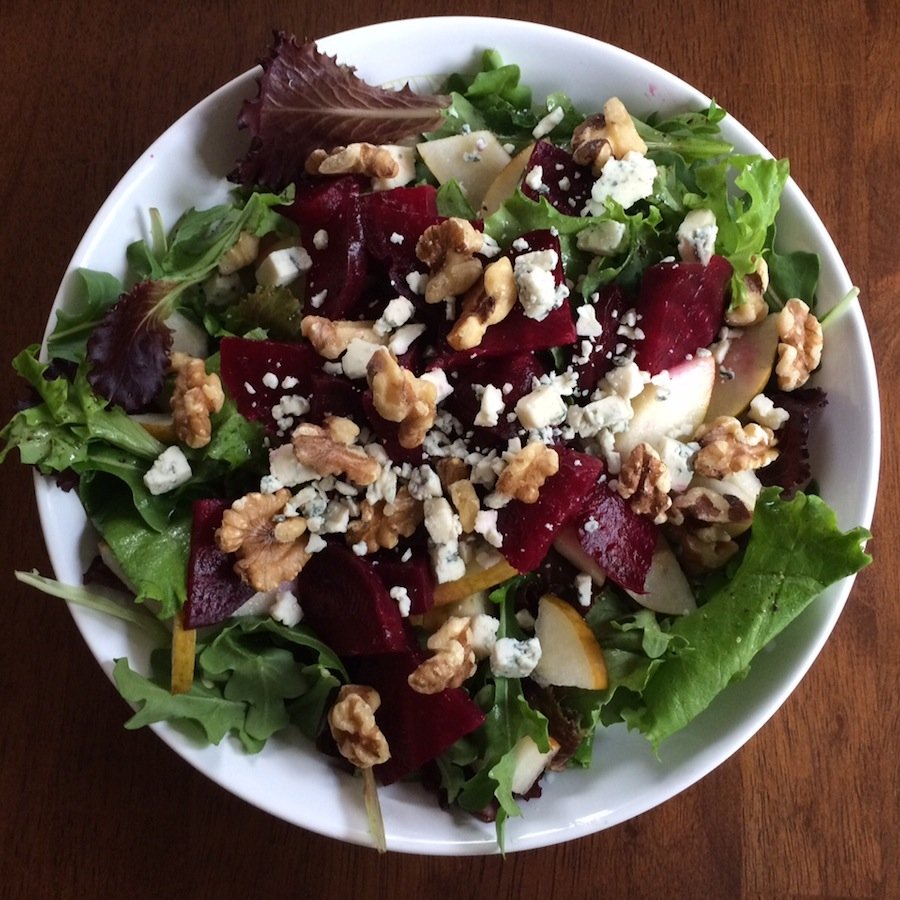
Even though apples are in peak season in the fall, and are an emblem of back-to-school, pears are what really scream fall to me. When I think "pear" my next thought tends to be "walnuts." They are a natural pairing (pear-ing?), and add some blue cheese and you have a trifecta of deliciousness.
In my recent On Nutrition column about antibiotic resistance, I talked about how at least half of the medically important antibiotics (read: used for humans, not just animals) used in this country are used in livestock raised for meat, milk and eggs, but when it comes to fighting antibiotic resistance, each of us as individuals also have a responsibility to use antibiotics responsibly--it's not all on the farmers.
A delicious, hearty lentil and mushroom recipe that's perfect for Meatless Monday, adapted from one of the many fabulous recipes on the Canadian Lentils website. One of the best culinary discoveries I made last week at FNCE!
If you've been reading my blog for a while or have perused my website, you know the drill: I love cooking, I own more than 200 cookbooks, blah, blah, blah. That's all true, except sometimes cooking's the last thing I want to do. Quite honestly, sometimes all I want to do is eat something delicious and nourishing before getting on with the rest of my evening agenda.
As I write this, I'm at the Food and Nutrition Conference and Expo (FNCE) in Nashville. This is my fourth FNCE, and I look forward to it every year for the education and the networking.
I’ll sum up the results of my September Cookbook Challenge by saying: Once Upon A Tart is an awesome book, and we cooked from it so much that I didn’t cook from my other two September picks.
My first thought as I sat in the audience at Town Hall waiting for J. Kenji Lopez-Alt to come on stage to talk about "The Science Behind Better Cooking" was that the audience was a perfect microcosm of old and new Seattle. My second thought was "Dammit, another cookbook I'm going to have to buy!"
I'm a coffee drinker by morning (and sometimes early afternoon), but a tea drinker day and night. While I know what I like when it comes to tea, I've never considered myself an expert (far from it).
I'm excited to be attending the International Food Blogger Conference (IFBC) this weekend in lovely downtown Seattle. My blog is 5+ years old and I am just as devoted to it as I was when I started it (it's a true labor of love).
A patient was telling me that she was thinking about taking some cooking classes (she lives alone and really doesn't like to cook very much), and I mentioned that I'd just signed up for a few classes through PCC Natural Markets. "I'm surprised that YOU would be taking cooking classes," she said.
In my article in Sunday's Seattle Times on The Moore Institute for Nutrition & Wellness at Oregon Health Sciences University (OHSU), I mentioned how significant it was that Bob and Cheree Moore of Bob's Red Mill pledged $25 million dollars to OHSU to further research and community outreach in the areas of epigenetics and nutrition for women and girls.
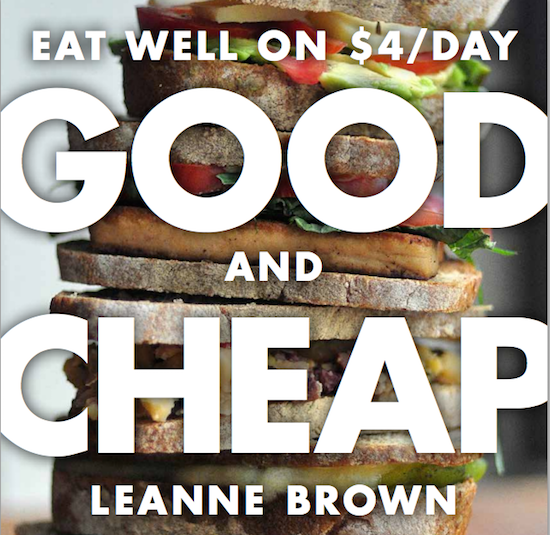
Last night I went to hear Leanne Brown, author of Good and Cheap: How to Eat Well on $4/Day, speak at Town Hall, in conversation with Seattle-based journalist Rebekah Denn (two-time James Beard Award-winner for food writing).
Even though I really wanted to go home and chill after work yesterday, I hopped off light rail early to walk to the Columbia City PCC Natural Markets for a "Elements of Taste" cooking class. As I suspected, I was glad that I did, because the class was awesome.