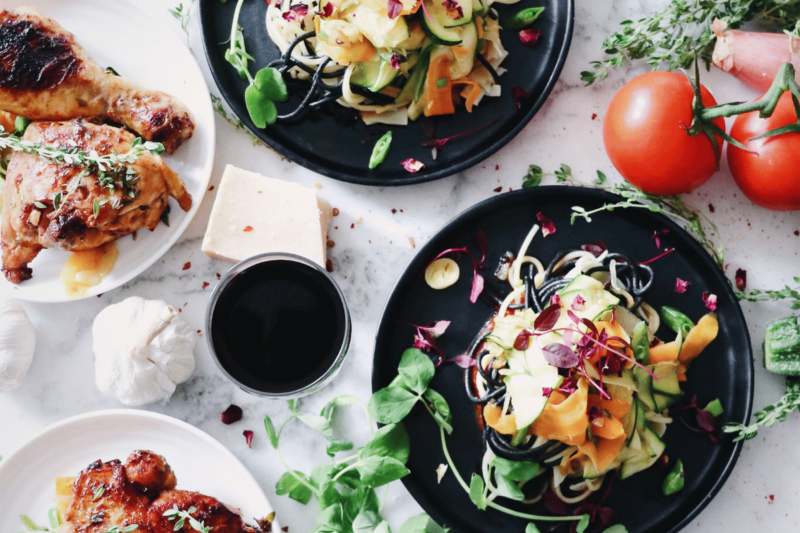
There’s this myth — perpetuated in part by the Washington Post [1] — that adopting an anti-diet approach is also anti-nutrition. In fact, I often hear clients and other people express trepidation about giving up dieting and relaxing their food rules because they care about nutrition and health.
The truth is that many factors that influence physical and mental health, and nutrition is only one of those factors. Also, you can also absolutely eat a nutritious, balanced diet with lots of variety without being restrictive or rigid about it. Research bears this out.
When you want to divest from diet culture and become more skilled at intuitive eating — which is an anti-diet approach to a healthy relationship with food — this includes:
- Learning to tune into (and trust) your hunger [2] and fullness [3] cues
- Diversifying your emotional coping toolbox [4]so food is only one of many tools, not the sole go-to
- Letting go of the diet mentality [5] and making peace with food [6] (rejecting the idea of “good” and “bad” foods and allowing yourself to enjoy food without guilt)
- Letting go of external food rules and setting boundaries around diet and body talk
- Exploring what true food satisfaction [7] means, with both nutritious foods and “fun” foods, and becoming more aware of how various foods and combinations of foods make you feel physically
All of this opens the door to “gentle nutrition.” Gentle nutrition is one of the principles of Intuitive Eating, but it’s also a general way to approach nutrition that honors your health and your taste buds while making you feel well. It’s an approach to nutrition that is nurturing, not punishing.
But…is this healthy enough?
We know that nutrition is an important factor in general health and chronic disease prevention, but this knowledge can lead to rigid eating with lots of food rules, and often with little satisfaction and a lot of stress.
In some cases, excessive worry about getting nutrition “right” can lead to orthorexia, a form of disordered eating that is literally an unhealthy obsession with eating healthy. For many people, the clean eating trend became a gateway to orthorexia, or even to a full-fledged eating disorder.
That’s concerning on multiple levels, but it’s also ironic, because there is no “perfect” way to eat. Nutrition science is evolving all the time, and there simply is no evidence that any one dietary pattern is better than all others for promoting health. Yes, eat vegetables, and yes, if at all possible don’t eat most of your meals from a package, but beyond that there’s a lot of options for eating well.
A rigid approach to eating may not help someone achieve the vision of they’re seeking, for several reasons. Restrictive dieting can affect mental health, especially if it’s joyless, requires a degree of cooking and meal preparation that doesn’t fit into your life, and makes it difficult to share meals with others. At least without falling into a guilt-and-shame spiral.
Focusing on eating (and exercising) “perfectly” also ignores the other factors that influence each person’s health. These factors include:
- Genetics
- Income and education level
- Access to quality non-biased healthcare, including preventive care
- Living in a safe neighborhood with green spaces
- A sense of resilience and adaptive coping skills (i.e., not needing to turn to substances to cope)
- Supportive relationships
- Freedom from oppression/feeling of autonomy
All of these factors are part of an anti-diet approach.
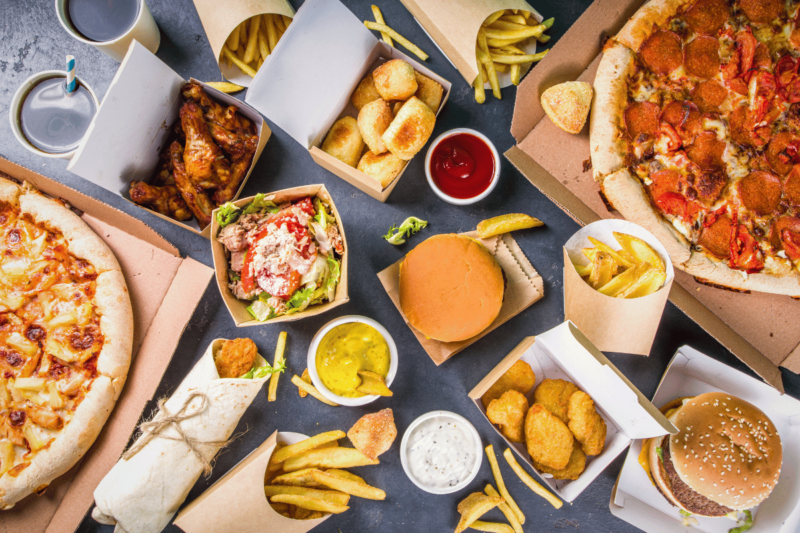
The anti-diet approach is not a food free-for-all
Unfortunately, another facet of the myths and misconceptions about embracing an anti-diet mindset is that it’s about eating whatever you want and as much as you want whenever you feel like it.
(I should add that an anti-diet approach supports body autonomy, which includes supporting the right to dispense with nutrition altogether. But if you’re reading this, odds are you do care about nutrition and have goals for your health, so going into food free-fall would probably not feel right to you.)
Now, it’s true that many people who start to release themselves from rigid food rules after many years (or decades) may go through a phase where eating feels a little chaotic [8] as they bring forbidden foods back into their life.
It’s kind of like you need to allow the pendulum to swing from rigid to rebound before it can settle in the middle.
However, if you’re also practicing paying attention to hunger, fullness and satisfaction, you’ll notice that eating in an “anything goes” way, while it serves a purpose initially, doesn’t feel great. That’s why it’s essential to pair unconditional permission to eat with attunement [9]. A few questions you might ask yourself to facilitate “tuning in” include:
- How hungry am I?
- What will satisfy me?
- Is the food still tasting good now that I’m halfway through a meal?
- Am I getting comfortably full and need to think about putting down my fork?
- Now that I’m done eating, how do I feel physically?
When you let go of food guilt/shame and eat with attunement, this opens the door to making food decisions that support your well-being in the moment and support your future goals for health and well-being, whatever that means to you. These food decisions will be unique to you.
Leaving morality off the plate
Healthy eating is a having a healthy balance of foods and a healthy relationship with food. Yes, there is a nutritional difference between an apple and apple pie, but there’s no moral difference. You’re not “good” for eating one, or “bad” for eating the other.
Nutritional balance is something you achieve over time. No single food, or meal, or even day of eating makes or breaks your health. And when you leave dieting behind you and increase your intuitive eating skills, if you do have a day, or even a week, of eating that doesn’t leave you feeling your best you’ll slip right back into the eating pattern that does leave you satisfied and feeling good, but without any internal guilt or recrimination.
That’s because you’ve released yourself from food and body shame. Also, when you’ve found a way of eating healthfully that’s pleasurable and feels good physically, you’re likely to continue honoring your health with your food choices.
When I’m working with clients who are breaking up with chronic dieting or healing from an eating disorder, at some point I get the panicked question: “Do I want broccoli because that used to be one of my diet/safe foods or do I want it because I like it and it makes me feel good?”
I explain that making informed food choices with nutrition in mind doesn’t betray your ability to be an intuitive eater or to move towards body liberation. I also ask if their desire for broccoli is coming from a mindset of self-care or self-control.
Self-care, not self-control
Odds are you know a lot about nutrition, because there’s a lot of nutrition information out there, and it’s hard not to absorb some of it. But remember that:
- it’s important to balance nutrition information with the pleasure from eating.
- that information doesn’t just come from what I say, or the nutrition guidelines say, or anyone else says. It comes from listening to your body.
When you’re not sure why you want to eat that broccoli – or other “healthy” foods – ask yourself:
- Do I really like the taste of these foods, or am I only eating them because they’re “healthy”?
- How does eating this food, or this type of meal, make my body feel? Do I like the feeling?
- How do I feel when eating this way consistently? Do I like the feeling and would I choose to feel this way again?
- Am I experiencing differences in my energy levels based on how I eat?
Your answers to these questions will tell your intention or desire to eat that broccoli (or some other “healthy” food, comes from a place of self-care, or self-control.
Related posts:
- What does ‘food freedom’ mean? [10]
- 5 reasons to trade food restrictions for food peace [11]
- Is your eating peaceful, or more like a battlefield? [6]
- How deprivation can make your eating feel out of control [12]
Disclaimer: All information provided here is of a general nature and is furnished only for educational purposes. This information is not to be taken as medical or other health advice pertaining to an individual’s specific health or medical condition. You agree that the use of this information is at your own risk.
Hi, I’m Carrie Dennett [13], MPH, RDN, a weight-inclusive registered dietitian, nutrition therapist and body image counselor. I offer compassionate, individualized care for adults of all ages, shapes, sizes and genders who want to break free from eating disorders, disordered eating or chronic dieting [14]. If you need to learn how to manage IBS symptoms [15] with food, or improve your nutrition and lifestyle habits [16] to help manage a current health concern or simply support your overall health and well-being, I help people with that, too.
Need 1-on-1 help for your nutrition, eating, or body image concerns? Schedule a free 20-minute Discovery Call [17] to talk about how I can help you and explore if we’re a good fit! I’m in-network with Regence BCBS, FirstChoice Health and Providence Health Plan, and can bill Blue Cross and/or Blue Shield insurances in many states. If I don’t take your insurance, I can help you seek reimbursement on your own. To learn more, explore my insurance and services areas page [18].